
The Blueprint Sprint: Accelerating Product Discovery
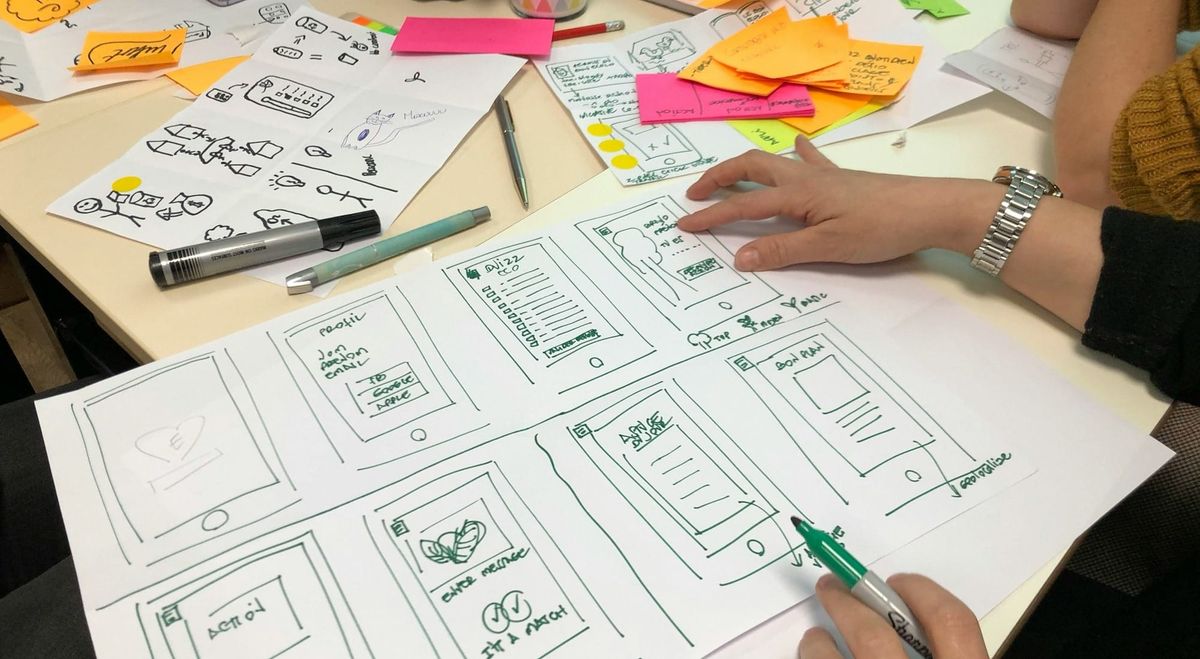
Most product launches go sideways before anyone writes a single line of code. Here's a framework for the ones that don't.
I'm going to say something that sounds controversial but really isn't. the reason most software products fail has almost nothing to do with the software. Now before you push back on that, let me be clear. Bad code kills projects. Wrong technology choices kill projects. Underqualified teams kill projects. All of that is real. But those failures are at least visible. When the code breaks, someone notices. when the architecture falls over under load, the system screams at you.
The failure mode that actually scares me is the quiet one. A team builds something technically solid that solves the wrong problem. Or they solve the right problem for an audience that doesn't exist. Or they build something that demos beautifully but nobody adopts it once it's live. Those projects don't crash. They just slowly bleed money until someone pulls the plug. And almost every time, when you trace back to the root cause, it's the same thing. Nobody did the discovery work. Or they rushed through product validation because someone upstairs wanted to see "progress."
PMI's data says roughly 70% of software development projects fail. Engprax partnered with J.L. Partners in 2024 and surveyed 600 software engineers about what actually separates the projects that succeed from the ones that don't. The finding that stuck with me was that projects where the team had clear requirements before development started were 97% more likely to succeed. 97% is a huge number, so it is baffling that teams constantly skip planning because it doesn't "feel like real work."
It is real work. It might be the most important work you do on the whole project.
What Product Discovery Actually Means
The phrase "product discovery" gets thrown around a lot, which means that we all probably have something different in mind when we say it. So let me be explicit about what I mean. Product discovery is the process of figuring out what to build, for whom, and why before you commit engineering resources. It is the act of deeply understanding your customers so that you can anticipate what they want without having to build failed products first.
- You're testing assumptions about your users.
- You're getting specific about the business problem in terms you can actually measure.
- You're designing the user experience
- You're working through the technical architecture so it doesn't collapse when you scale.
Most teams think they do this. What they actually do is have a couple meetings where the founder describes their vision, someone takes notes, and the engineers start building off those notes. That's not discovery. That's the classic telephone game. And just like with the telephone game, critical context gets lost at every handoff and six months later the team has built something that sort of resembles the original idea but doesn't actually solve the true underlying problem.

In fact, The Project Management Institute found that 37% of project failures come from unclear goals. But when requirements and business needs were properly documented, projects 50% more likely to succeed. Poor requirements management alone causes 32% of project failures. Every one of those problems is something a real product discovery process would have caught.
Why the Normal Approach Falls Apart
Here's what I see happen. Someone has an idea. They put together a brief or a pitch deck. They bring on engineers. The engineers start building. Problems start showing up. Scope changes. Budget grows. Timeline slips.
This happens so commonly because there is a massive gap between "I have an idea for a product" and "I have a plan that a team can actually build from." And by a real plan, I mean all of the following:
- Features prioritized against business impact
- Shared understanding of how the features will work.
- User experience that's been designed and validated
- Architecture designed that accounts for what happens at scale
- All the stakeholders genuinely agreeing on what success looks like.
That almost never happens organically. About 78% of software projects experience scope creep, and honestly that doesn't surprise me. Scope creep isn't random. It happens because the scope was never properly locked down. The team starts writing code, discovers the gaps as they go, and every gap at that point costs engineering hours instead of a conversation.
How We Approach Product Discovery
This is where I describe how we handle it at Cameo Labs. I'll be upfront that I'm talking about our own service, but the principles apply whether you work with us or not.
We call it the Blueprint Sprint. Two weeks. Week 1 is four days of in-person workshops. Week 2 is prototype and roadmap development.
During Week 1 we bring your key decision makers together with our solution architects, product strategists, and designers. I want to talk about the in-person part for a second because I know it sounds old-fashioned, but we've tried doing this remotely and it's not the same. There's something about being in the same room where you catch things you'd completely miss on a video call. You see the hesitation on someone's face when a feature gets described. You notice when the CTO and the head of product are nodding but they're picturing two completely different things. I've watched those moments save entire projects and they almost always happen in person.
During those four days we cover a lot of ground. We evaluate existing technology for production readiness. We work through the technical architecture for what the system needs to look like in two or three years, not just what works for a demo. We figure out which features actually drive business value, and almost always there's a small set that delivers the vast majority of results. And we work through UX design to make sure that when real people interact with this thing, they can actually use it without a training manual.
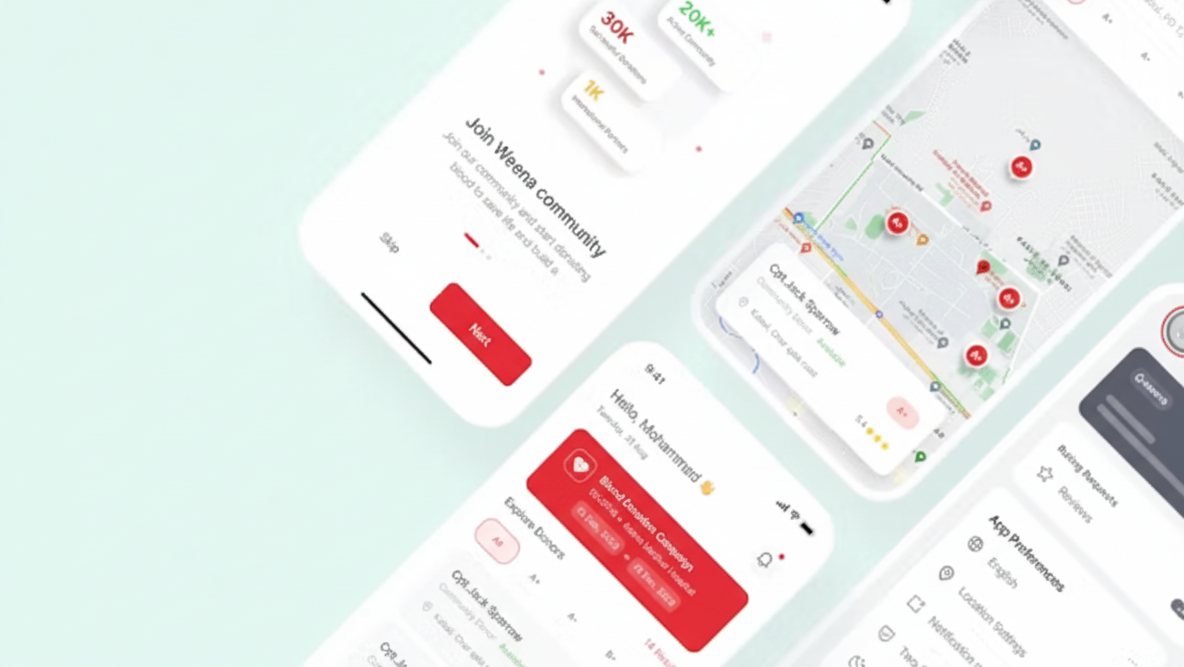
Week 2 is where it becomes tangible. our team builds a clickable prototype, and I need to be clear about what I mean because people hear "prototype" and think wireframes. This is an interactive prototype that your sales team can actually put in front of customers. We also deliver the technical architecture, a development roadmap showing what gets built when and what it costs, and a complete product backlog with user stories. everything you would need to start building immediately.
What This Prevents
I want to get specific here because the numbers matter.
Building the wrong thing. RAND Corporation found the number one reason AI projects fail is nobody agreed on what problem they were solving. That finding isn't unique to AI. I see it everywhere. Two weeks of alignment up front takes the single most common cause of project failure off the table.
Scope creep. When features are documented in a prioritized backlog with business rationale behind each one, the conversation around change requests shifts. It stops being "sure, let's add that" and starts being "what does that displace and is the trade-off worth it."
Expensive mid-build discovery. This is the one that really costs you. A team without a validated plan discovers the gaps while they're writing code, and every gap costs engineering time. The J.L. Partners study found that significant requirements changes during development made projects measurably less likely to succeed. The Blueprint Sprint front-loads all of that discovery into two weeks where changes cost conversation time, not refactoring time.
Adoption failure. You can build something that is technically perfect and still fail if people don't understand it, cant use it or trust it. The UX design work during the Blueprint Sprint is specifically about making sure workflows match how users actually think and work. More importantly, those decisions get validated during the sprint. not six months later after launch when fixing them means rebuilding half the front end.
When You Need This (and When You Don't)
Not every project needs a formal product discovery workshop. But most of the time skipping discovery is genuinely reckless. If you are building a new product from scratch, you have multiple stakeholders who each have a different picture of what this product should be, if you're worried your team lacks the expertise or the knowledge to execute, Or if you've already had a development effort fail, you especially need this because whatever went wrong was almost certainly a planning problem wearing a technical disguise.
The Engprax data is hard to argue with. Documented specs made projects 50% more likely to succeed. Clear requirements made them 97% more likely.
The Economics
People hear "two-week discovery engagement" and assume it slows them down. I've seen the opposite every time.
Average software development projects run 45-50% over schedule. On a $500K effort, that's $225K to $250K in overruns. those overruns almost always trace back to requirements that weren't defined or architectural decisions that didn't account for reality. The Blueprint Sprint costs $50K. if it prevents even a fraction of those overruns, the math speaks for itself. What we've actually seen is that it compresses timelines by months because the engineering team walks in already knowing what they're building and why each feature exists.
Most of our clients move directly from the Blueprint Sprint into production development with us, ranging from $350K for a focused V1 to $2M for a complete platform. Everything produced during those two weeks feeds directly into the build. The backlog doesn't get recreated. The architecture doesn't get rethought. the people who ran the workshop lead the development. That continuity matters, and honestly most development processes get it wrong.

Frequently Asked Questions
What is a product discovery workshop and why does it matter? a Product Discovery Workshop is a structured process for defining what your software product should do, who it's for, and how it should work before development begins. The reason it matters is that the research is pretty one-sided on this. projects where teams have clear documented requirements succeed at dramatically higher rates. PMI puts 37% of failures down to unclear goals. Good discovery forces that alignment before anyone writes code.
How long does product validation take? The Blueprint Sprint is a two-week process. Four days of in-person workshops the first week, then our team builds the prototype, roadmap, and backlog the second week. Most traditional discovery processes stretch to three or four months. butwe compress it by getting the right people in one room, forcing clear decisions, and not letting momentum drop.
What are the biggest reasons products fail during development? Unclear goals (37% of failures), poor requirements management (32%), and scope creep (78% of projects). if you trace scope creep back far enough it almost always comes from requirements that weren't nailed down. These are planning problems, not technology problems.
How much does the Blueprint Sprint cost? $50K. You walk away with a clickable prototype your sales team can demo, technical architecture designed for scale, prioritized features tied to business impact, a complete backlog with user stories, a phased roadmap with cost estimates, and validated UX designs. I explain it to people like this. you wouldn't pour a foundation without architectural drawings.
Can AI help with product discovery? It can speed up parts of it. AI is good at synthesizing market research, at pulling apart competitive landscapes, and generating hypotheses about user behavior. Where AI falls short is the judgment calls. Including decisions about which features to prioritize, what trade-offs to make, reading the room when stakeholders disagree. Those decisionsrequire experienced humans. The approach that works best combines AI-assisted research with strategists who know what to do with the findings.
At Cameo Labs, we built the Blueprint Sprint because we kept watching talented teams with real budgets fail for completely preventable reasons. Two weeks of discovery work prevents months of expensive wrong turns. If you're planning a significant product investment and want to get it right from the start, let's talk.